Mateusz Jaszczuk

I am a Master's student in Mechanical Engineering (Robotics) at the GRASP Lab, University of Pennsylvania, advised by Prof. Nadia Figueroa.

My research focuses on data-driven methods for adaptive and reactive robotic manipulation — enabling robots to infer task-relevant structure and adjust their control strategies in real time, toward safe and efficient deployment in complex, unstructured environments.

Prior to Penn, I received my B.S. in Aeronautical and Astronautical Engineering from Purdue University, where I worked on Bayesian transfer learning for composite manufacturing and led autonomous UAV development at the Air Force Research Lab.

profile photo

News

Sep 2025 Presented Rapid Mismatch Estimation at CoRL 2025 in Seoul!
Aug 2025 Our paper Rapid Mismatch Estimation was accepted to the 9th Conference on Robot Learning (CoRL)!
Jan 2025 Joined Figueroa Robotics Lab (GRASP), advised by Prof. Nadia Figueroa.
Aug 2024 Started my Master’s degree in Mechanical Engineering at the University of Pennsylvania.

Research Projects

Learning to Feel: Force-Aware Data-Driven Estimation and Control for Adaptive Physical Interactions
Mateusz Jaszczuk
Advisor: Dr. Nadia Figueroa    Committee: Dr. Rachel Holladay, Dr. Paris Perdikaris
Master's Thesis in Mechanical Engineering and Applied Mechanics, University of Pennsylvania
Thesis / Code (coming soon)

We propose an adaptive impedance control framework combining online system identification with an interaction classifier, enabling robots to compensate for unknown end-effector loads while remaining passive to human perturbations and leveraging estimated contact forces as guidance for motion planning.
Rapid Mismatch Estimation via Neural Network Informed Variational Inference
Mateusz Jaszczuk, Nadia Figueroa
9th Conference on Robot Learning (CoRL), 2025
Paper / Project Website / Code

We propose an online, probabilistic framework for estimating the mismatch in the end-effector dynamics model, allowing impedance-controlled robots to manipulate heavy, unknown objects, showcasing fast and safe adaptation.

Probabilistic physics-guided transfer learning for material property prediction in extrusion deposition additive manufacturing
Akshay J Thomas, Mateusz Jaszczuk, Eduardo Barocio, Gourab Ghosh, Ilias Bilionis, R Byron Pipes
Computer Methods in Applied Mechanics and Engineering, 2024
Paper

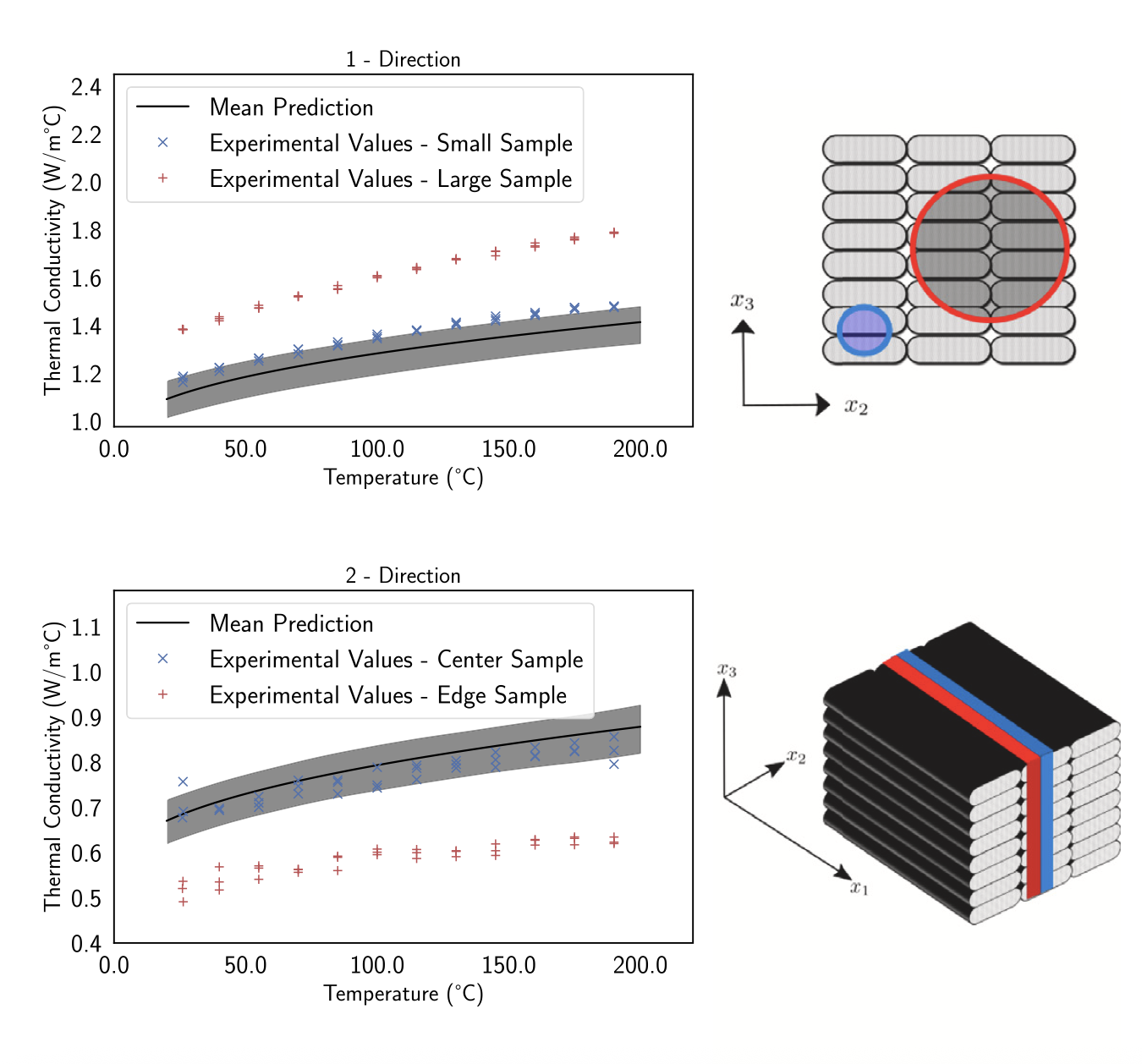
We introduce the concept of physics-guided transfer learning to predict the thermal conductivity of an additively manufactured short-fiber reinforced polymer (SFRP) using micro-structural characteristics extracted from tensile tests.

Other Projects

Implementation of Operational Space Control Barrier Functions on Franka Manipulator
Mateusz Jaszczuk, Benjamin Aziel
MEAM 5170 Control and Optimization with Applications in Robotics — Final Project
Code (coming soon)

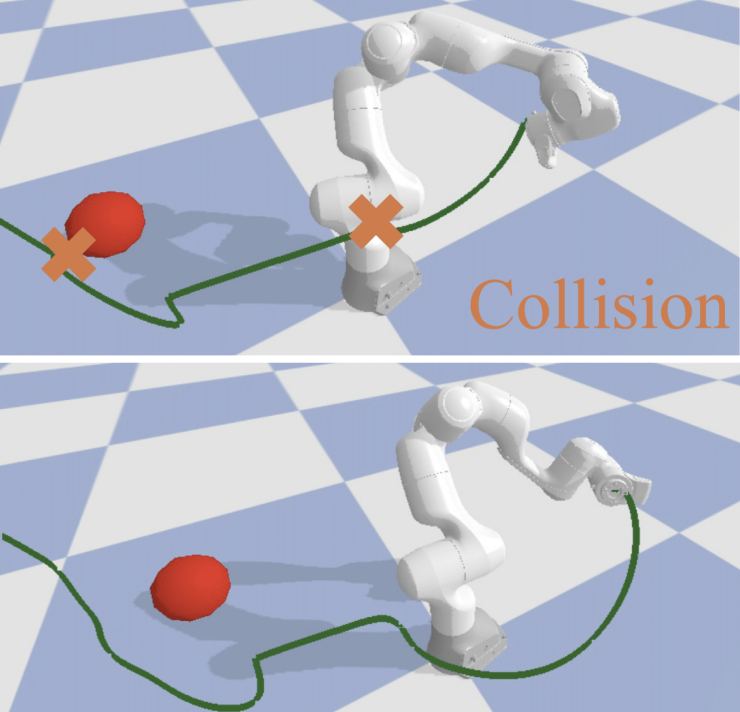
We implemented control barrier functions (CBFs) into an operational space impedance controller for a 7-DoF Franka Research 3 arm, enforcing joint limit, obstacle avoidance, and self-collision avoidance in real-time. The solver was implemented in Python with PyBullet and OSQP and evaluated on tasks requiring strict safety constraint enforcement.

Vision-Based Pick-and-Place with Franka Manipulator
Mateusz Jaszczuk, Benjamin Aziel, Solomon Gonzalez, Andrik Puentes
MEAM 5200 Introduction to Robotics — Final Project

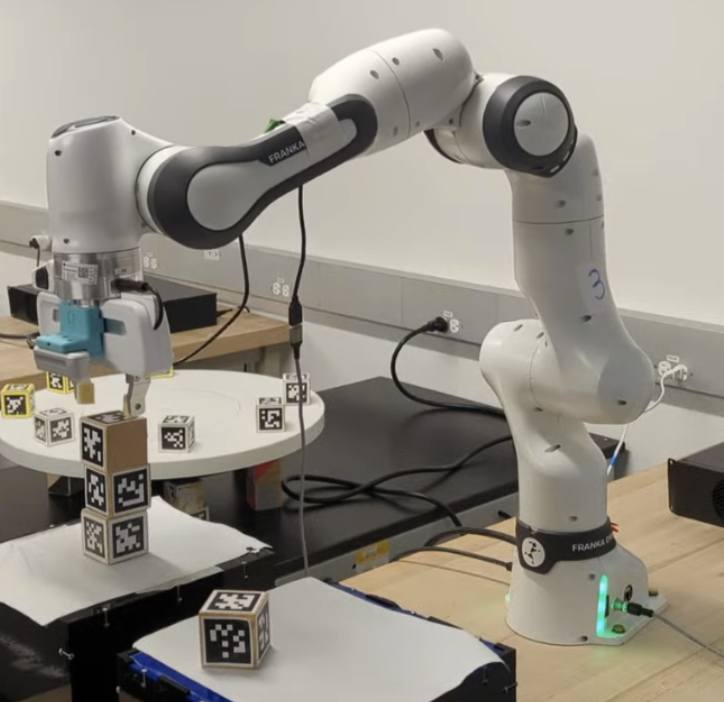
We developed a full perception-to-execution pipeline for autonomous block stacking on a 7-DoF Franka Research 3, combining AprilTag-based detection, kinematic motion planning, and grasp execution. The system was evaluated on building stable towers under time constraints in both static and dynamic block configurations.

NASA Student Launch Competition
Purdue Space Program — NASA SL
Project Website

Led a 60-member interdisciplinary team as Project Manager and Lead Structures Engineer for NASA Student Launch, overseeing the full design-to-launch cycle of a high-powered competition rocket. Coordinated deliverables and communications directly with NASA and NAR, managed budget and timeline, and led structural design including FEA, CFD, and component manufacturing.

Implementation of Neural Radiance Field
ESE 6500 - Learning in Robotics

Implemented Neural Radiance Fields (NeRF) from scratch in PyTorch following the original formulation, including positional encoding, an MLP-based radiance field, and volumetric rendering via differentiable ray marching. Explored the effect of network capacity and sampling strategies on rendering quality across multiple views.

Building GPT from Scratch: Transformer-Based Character-Level Language Modeling
ENM 5310 Data-driven Modeling and Probabilistic Scientific Computing — Final Project
Code

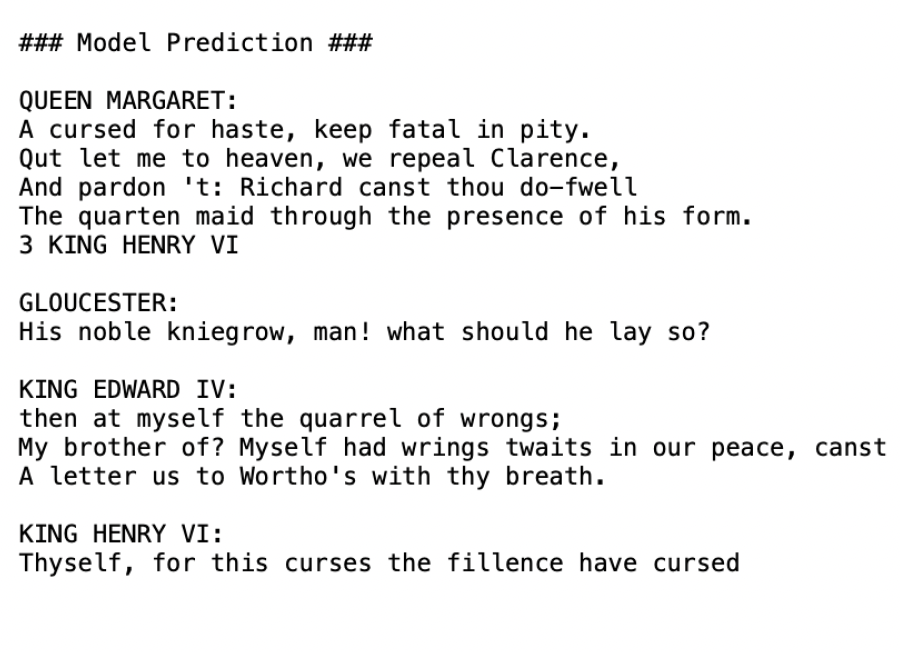
Implemented a GPT-inspired transformer from scratch in PyTorch following Andrej Karpathy's approach, including multi-head self-attention, positional encoding, and MLP blocks for character-level language generation on different datasets. Conducted ablation studies on regularization techniques including dropout, residual connections and layer normalization.


This website was inspired by and built based on this project page.